Trailing vs Static Drawdown in Prop Challenges (Gold)
Static vs trailing drawdown in prop challenges, explained simply for gold traders, as generic education with common example rules only (no firm named, no comparison): what drawdown means, static vs intraday trailing, end-of-day trailing and trailing with a lock, one gold trade under three rules, why gold's swings make intraday trailing harder, how the lock works, a real win under both rules, how traders breach a trailing limit, how to manage it, and the questions to ask.
Chapters
- 0:00Same win, different room
- 0:38What drawdown means
- 1:15Static and trailing
- 2:02One gold trade, three rules
- 3:07Why gold makes it harder
- 3:42How the lock works
- 4:26The real win, under both rules
- 5:49How traders breach a trailing limit
- 6:25How gold traders manage it
- 6:55Check your own terms
- 7:21If you are in India
- 7:52Recap
Key points
Drawdown is how far the account may fall before a challenge fails. A static limit stays at one fixed level; a trailing limit moves up as the account makes new highs.
Intraday trailing follows your highest equity, even open profit; end-of-day trailing moves only at the daily close; many trailing rules stop moving (lock) once the limit reaches the starting balance.
Gold’s big swings make intraday trailing harder: a trade can run into profit, come back, and still shrink your room even though it never lost.
A real win on 31 Jul 2026 (1.6R before costs) left $6,778.8 of room under a static rule but $6,000 under intraday trailing on an example $100,000 account.
Manage a trailing limit: write down your live floor after every trade, take partial profit or move the stop once a trade has run far, and size smaller until the lock. These are example rules, not any firm’s terms.
Chart data: COMEX gold futures 1-hour bars from Yahoo Finance (GC=F), times in UTC (New York = UTC-4). Rule numbers ($100,000 account, 6% maximum loss, lock at the starting balance) are common example rules, not the terms of any firm. The example trade was chosen because it reached the target; no pass rate or win rate is claimed, and R values are before costs. Education only, not a signal.
Read more: Trailing vs Static Drawdown Explained: How Prop Firm Maximum Loss Rules Work on Gold · Prop Firm Daily Drawdown Explained: The Maths of a 5% Daily Loss Limit on Gold · The Prop Firm Rules Nobody Reads: EAs, Weekends, VPNs, Lot Caps and More · Am I Ready for a Prop Challenge? A Self-Test From Your Own Trading Journal · Trading Gold in Prop Firm Challenges: Rules, Volatility, Sizing and a Realistic Game Plan · Trailing drawdown · Drawdown · Prop firm · Prop drawdown tracker
Transcript
31 July. A planned sell on gold, at half a percent risk on an example 100,000 dollar challenge account. Five hours later, the target was hit. 1.6R. Plus 778.8 dollars. Here's the strange part. Under one kind of rule, that win gave her more room to breathe. Under another kind, it gave her no extra room at all. Same trade. Same profit. That's the difference between static and trailing drawdown. In this lesson: what they are, how they move, the traps on gold, and how to trade safely under each.
Chapter one. What drawdown means. Drawdown is the fall from a high point to a later low. Like a hiker who climbs to a peak, then walks down into a valley. The drop from the peak is the drawdown. A prop challenge turns this into a maximum loss rule. Fall past it, and the account is closed. We don't name or compare any firm. Every number here is a common example rule. Behind it, there's usually also a daily loss limit that resets each day. Today, we look at the big one: the maximum loss for the whole account.
Chapter two. Static and trailing. A static limit is fixed from your starting balance. Take an example 100,000 dollar account, with a 6 percent maximum loss. The floor sits at 94,000, and it never moves. Every dollar of profit is extra room. A trailing limit follows your account's highs, like a dog on a leash following its owner up a hill. As your high rises, the floor rises with it. The gap stays the same. There are three common trailing versions. Intraday trailing on equity follows every open profit, in real time. End-of-day trailing only moves at the daily close. And some trailing limits lock once they reach the starting balance.
Chapter three. One gold trade, three rules. A made-up example from our written guide. The same account. You buy 1 lot at 4,000. During the day, gold rallies to 4,030. Open profit: 3,000 dollars. Equity: 103,000. Then gold turns, and you close at 3,990. A loss of 1,000. Your balance is 99,000. Under the static rule, the floor is still 94,000. You have 5,000 dollars of room. Under end-of-day trailing, the daily close never went above 100,000, so the floor is also 94,000. Room: 5,000. But under intraday trailing on equity, the floor followed your peak of 103,000, up to 97,000. Room left: just 2,000. A 1,000 dollar loss cost you 4,000 dollars of room, because the limit followed a profit you never banked.
Chapter four. Why gold makes it harder. On gold, a 30 dollar swing inside one session is ordinary. So under an intraday trailing rule, a trade that runs in your favour, then comes back, quietly tightens your floor. Do that twice more, and the trailing account can be closed, while a static account would still have plenty of room. That's not a rare accident. That's a normal gold week. So under intraday trailing, an open profit is not free. It moves your floor, whether you bank it or not.
Chapter five. How the lock works. Some trailing rules lock. Same example account, a 6 percent trailing limit that locks at the starting balance. The floor starts at 94,000, and trails your highs. Once your account's high reaches 106,000, the floor reaches 100,000, and stops there. From then on, it behaves like a static rule. If equity rises to 110,000, you now have 10,000 dollars of room. Before the lock, you never had more than 6,000. This single clause can decide whether an account is workable for you. If the terms say nothing about a lock, assume it keeps trailing.
Chapter six. The real win, under both rules. Now the real trade. 31 July. The Asian range, from 8 p.m. to midnight New York, runs from 4,129.7 to 4,165.4. At 3 a.m. New York, an hour closes below the floor, at 4,125.1. She waits for the retest. The next hour climbs to 4,125.4, within 5 dollars of the old floor, and closes lower, at 4,117.6. The retest held. Sell at 4,117.6. Stop at 4,132.7. Risk half a percent, 500 dollars, so 0.33 lots. That's 498.3 dollars at risk. Target: 4,094.0. Five hours later, the target is hit. 23.6 points, 1.6R, plus 778.8 dollars. Under a static rule, her room grows to 6,778.8. Under intraday trailing, the floor climbed with her profit, and her room is still 6,000. Same win. Different room.
Chapter seven. How traders breach a trailing limit. Letting winners round-trip. Under intraday trailing, an open profit that disappears still tightens the floor. Wide stops with large size. A stop that fit on day one may be too wide once the floor has crept up. Adding to a winner. It raises your peak fast, and a sharp reversal hits a much higher floor. Forgetting the limit moved. Many traders work out their room once in the morning, and never again. And assuming a lock exists when the terms don't say so.
Chapter eight. How gold traders manage it. Know your live floor. Write it down after every trade, not just at the start of the day. Under intraday trailing, take partial profit or move your stop once a trade has run far, so a full round trip can't squeeze your floor too much. Size smaller under trailing rules, because profit doesn't buy room until the lock. Before the lock, smaller risk. After it, static logic applies.
Chapter nine. Check your own terms. Is the maximum loss static or trailing? If trailing, does it follow equity in real time, or the end-of-day balance? Does it lock, and at what level? Is it a percent of the starting size, or of the current high? Do commission and swap count? And does the same rule apply in the test and in the funded account? Ask for a worked example, in writing.
Chapter ten. If you are in India. We do not recommend prop challenges, offshore brokers or CFD trading for residents of India. Indian rules under FEMA allow residents to deal in forex only with authorised persons, on permitted platforms. The Reserve Bank of India keeps an alert list of unauthorised platforms. The links are in the description. This is general information, not legal advice.
Let's recap. Static: the floor never moves, and profit adds room. Trailing: the floor follows your highs, like a dog on a leash. Intraday trailing on equity follows open profit too, so on gold, round trips are expensive. A lock can turn trailing into static. On 31 July, the same 1.6R win added room under static, and none under trailing. Know your rule, know your live floor, and size for it. The full written guide is on our website, link in the description. Subscribe for the next lesson, and join our gold community, to learn with other gold traders. It's free.
Other short videos
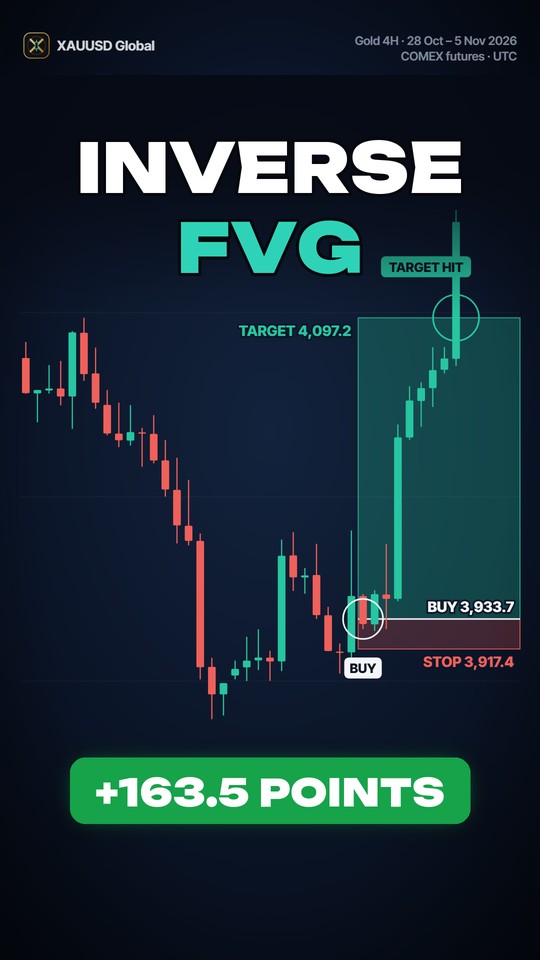
Inverse Fair Value Gap: When the Gap Fails and Flips
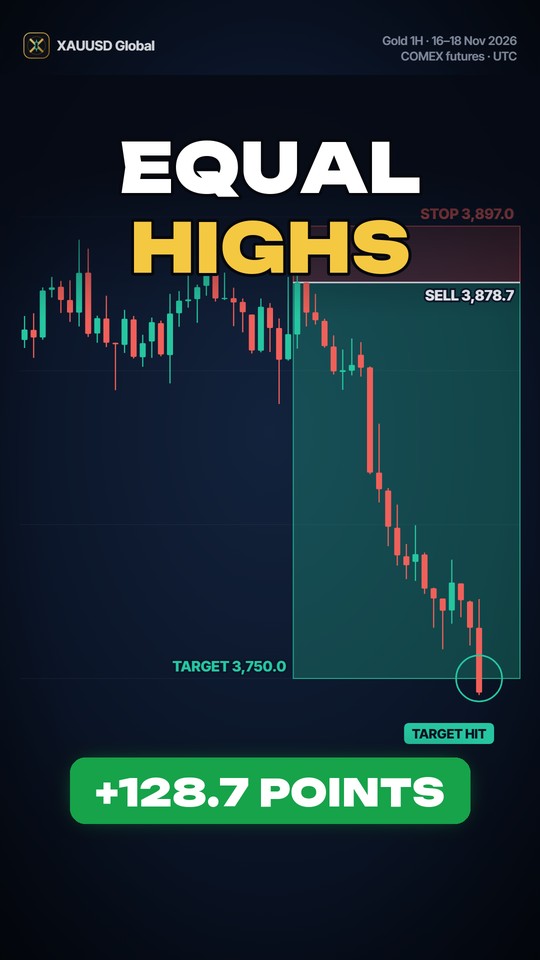
Equal Highs on Gold: Where the Stops Get Grabbed

Trendlines and Channels on Gold (XAUUSD): Step by Step