Prop Challenge Daily Drawdown on Gold (XAUUSD)
The daily loss limit (daily drawdown) in prop challenges, explained simply for gold traders, as generic education with common example rules only (no firm named, no comparison): what the limit is, the ways it can be measured (balance, equity, the higher of the two, a percentage of the reset level; reset time, commission and swap), the gold maths at 0.1, 0.5 and 1 lot against gold's real average daily range, two traps (a floating loss with slippage, and open profit at the reset), common ways traders breach the limit, a personal buffer, a real trade sized inside it, and the questions to ask before any challenge.
Chapters
- 0:00A small trade, far from the limit
- 0:36What the daily limit is
- 1:19How the limit can be measured
- 2:02The gold maths
- 2:51Trap one: the floating loss
- 3:44Trap two: open profit at the reset
- 4:30How traders breach the limit
- 5:10Build a buffer you can live with
- 5:56A real trade, inside the buffer
- 7:15Check your own terms
- 7:48If you are in India
- 8:18Recap
Key points
The daily loss limit is the most you may lose in one day of a prop challenge; breaking it usually ends the challenge, even if the account is up overall.
Rules differ in how the limit is measured: on balance or equity, from the higher of the two, as a share of the reset level, at which reset time, and with or without commission and swap. Read your own terms.
Gold moves a lot: at 1 lot, an average day’s range (about $88 in Oct-Nov 2026) is far bigger than a 5% limit on a $10,000 account, so size from the stop, not from hope.
Two traps: a floating loss counts on equity before the stop fills, and open profit at the reset can raise the day’s starting point. Keep a personal buffer well inside the limit.
A real trade on 18 Feb 2026, sized at 0.5% of an example $10,000 account, reached its target (3.7R before costs) far from the limit. These are example rules, not any firm’s terms.
Chart data: COMEX gold futures daily and 1-hour bars from Yahoo Finance (GC=F), times in UTC. Rule numbers (5% daily limit, $10,000 and $100,000 accounts) are common example rules, not the terms of any firm. The example trade was chosen because it reached the target; no pass rate or win rate is claimed, and R values are before costs. Education only, not a signal.
Read more: Prop Firm Daily Drawdown Explained: The Maths of a 5% Daily Loss Limit on Gold · Trailing vs Static Drawdown Explained: How Prop Firm Maximum Loss Rules Work on Gold · The Prop Firm Rules Nobody Reads: EAs, Weekends, VPNs, Lot Caps and More · Am I Ready for a Prop Challenge? A Self-Test From Your Own Trading Journal · Trading Gold in Prop Firm Challenges: Rules, Volatility, Sizing and a Realistic Game Plan · Daily loss limit · Drawdown · Prop firm · Prop drawdown tracker · Prop challenge calculator
Transcript
18 February. A trader in a prop challenge. Her rule card says: risk half a percent per trade, and stop the day long before the daily limit. She marks her levels, and waits. Gold breaks out of its morning range. She buys the retest, small. Three hours later, the target is hit. 3.7R, and her daily limit was never even close. In a prop challenge, the daily loss limit is the rule that ends most accounts. In this lesson: what it is, how it's measured, the gold maths, the traps, and a buffer that keeps you safe.
Chapter one. What the daily limit is. A prop challenge is a test. You trade a company's account under strict rules, and if you pass, you may trade with their money. We don't name or compare any firm. These are common example rules only. The daily loss limit, or daily drawdown, is the most the account may lose in one trading day. Break it once, and the account is usually closed. A common example is 5 percent, and it resets once a day. Think of it like a fuse in your house. It doesn't care why too much power went through. One spike, and the lights go out. Your job is to never get close to the fuse.
Chapter two. How the limit can be measured. The same 5 percent can mean different things. Balance-based counts only closed trades. Equity-based counts open trades too, their floating profit and loss. Some use the higher of your balance or equity at the reset, minus the limit. Others take 5 percent of your level at the reset, not of the starting size. Two more details matter. The reset time, often near the daily break in New York, so a trade held across it carries its open result into the next day. And whether commission and swap count. Always read the exact terms, and ask for a worked example in writing.
Chapter three. The gold maths. One lot of gold is 100 ounces. So every 1 dollar move is worth 100 dollars on 1 lot. Take an example 10,000 dollar account, with a 5 percent daily limit. That's 500 dollars. At 1 lot, a move of just 5 dollars uses the whole day. At 0.5 lot, 10 dollars. At 0.1 lot, 50 dollars. Now real gold. Over 20 trading days to 13 November, gold's average daily range was 87.8 dollars. So at 1 lot, the limit is a tiny wiggle. At 0.1 lot, it covers about 57 percent of a normal day. That's the scale where a stop-based plan can breathe.
Chapter four. Trap one: the floating loss. A made-up example from our written guide. The same 10,000 dollar account, equity-based. So today's floor is 9,500. You buy 0.5 lot at 4,000, with a stop at 3,990. A planned loss of 500. You think it fits exactly. Then big U.S. news lands. Gold drops in seconds. Your stop fills with slippage, at 3,989.2. The loss is 540, plus commission. Equity touched 9,460. Breach. Even though you planned for exactly the limit. The lesson: the limit is a price level on your equity, not a plan. Gaps, slippage and spreads all push you toward it. Never size a trade to the limit.
Chapter five. Trap two: open profit at the reset. Another example. A 100,000 dollar account. The limit is measured from the higher of balance or equity at the reset, minus 5,000. You hold 1 lot from yesterday, 15 dollars in profit at the reset. That's 1,500. So today's floor is 96,500. Gold falls 50 dollars from the reset price. Equity hits 96,500. Breach. But from your entry, the trade is only 35 dollars down. A 3,500 dollar loss, well under 5 percent. That's why holding across the reset needs extra care.
Chapter six. How traders breach the daily limit. Sizing to the limit. Risking the whole day on one trade leaves no room for slippage. Several trades at once. Three positions risking 2 percent each are really one 6 percent position, if gold moves against all of them. Averaging down: adding to a loser on a fast gold day. Holding through news, when a stop isn't filled at its exact price. And chasing losses. After a losing morning, the room left is smaller, but the urge to trade bigger is stronger. That's when a hard stop for the day helps more than willpower.
Chapter seven. Build a buffer you can live with. A buffer is your own limit, set well inside the challenge limit. For example: stop for the day at half of it. On a 5 percent limit, that's 2.5 percent. On the 10,000 dollar account, 250 dollars. Then risk small per trade. At 0.5 percent, 50 dollars, you can lose 5 trades in a row before your own stop. You'll almost never touch the real limit. Size from the stop, not from the account. Expect gold stops to fill a dollar or more beyond your level in fast markets. And be flat, or smaller, before big news, unless your plan is built for it and the rules allow it.
Chapter eight. A real trade, inside the buffer. 18 February. The Asian range, from 8 p.m. to midnight New York, runs from 4,891.8 to 4,961.8. At 7 a.m. New York, an hour closes above the top, at 4,963.5. Only 1.7 above. She waits for the retest. The next hour dips to 4,962.9, right at the old top, and closes higher, at 4,974.2. The top held as a floor. Buy at 4,974.2. The stop at 4,958.8. A risk of 15.4 dollars an ounce. At 0.5 percent risk, that's 0.03 lots, so 46.2 dollars at risk. The target, the range height above the top: 5,031.8. Three hours later, the target is hit. 57.6 points. 3.7R. That's 172.8 dollars before costs. Her daily limit was 500 dollars away, and she never came near it.
Chapter nine. Check your own terms. Before you start any challenge, answer these. Is the daily limit balance-based or equity-based? Is it a percent of the starting size, or of the level at the reset? If equity counts, is it the higher of balance and equity? What is the reset time, and in which time zone? Convert it to your own. Do commission and swap count? Is a breach automatic on a touch? And is there a worked example? If not, ask for one, in writing.
Chapter ten. If you are in India. We do not recommend prop challenges, offshore brokers or CFD trading for residents of India. Indian rules under FEMA allow residents to deal in forex only with authorised persons, on permitted platforms. The Reserve Bank of India keeps an alert list of unauthorised platforms. The links are in the description. This is general information, not legal advice.
Let's recap. The daily limit is a fuse. One spike, and the account is closed. Learn exactly how your challenge measures it. On gold, 1 lot moves 100 dollars per dollar. Size small, never to the limit, and keep a buffer at half the limit. On 18 February, a half-percent trade made 3.7R, and the limit was never close. Stay far from the fuse, and let the good trades come. The full written guide is on our website, link in the description. Subscribe for the next lesson, and join our gold community, to learn with other gold traders. It's free.
Other short videos
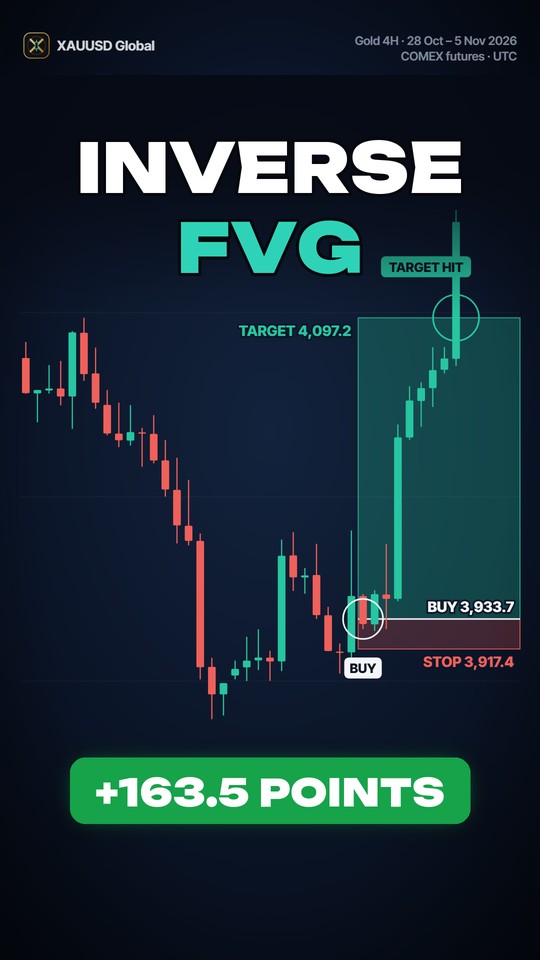
Inverse Fair Value Gap: When the Gap Fails and Flips
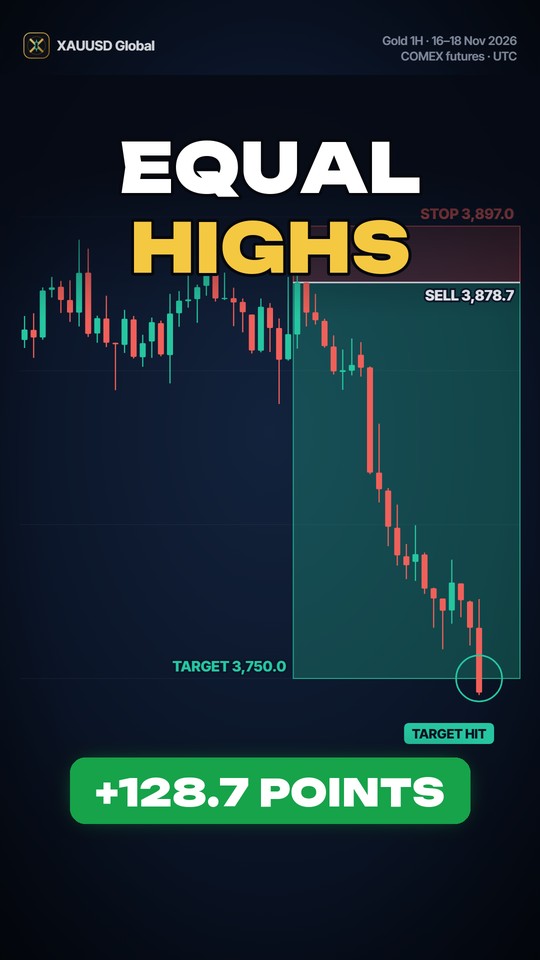
Equal Highs on Gold: Where the Stops Get Grabbed

Trendlines and Channels on Gold (XAUUSD): Step by Step