FOMO in Trading: Stop Chasing Gold (XAUUSD)
FOMO (fear of missing out) on gold, explained simply: the feeling, why your brain wants to chase a move that already happened, the same move traded twice (chased vs planned, with our guide's example numbers), the warning signs, two real gold days traded with patience (a missed move let go, then a planned retest trade the next morning; and a retest entry with a small stop), five fixes for today, the three-minute rule and a printable FOMO rule card.
Chapters
- 0:00A missed move, then a planned trade
- 0:36The feeling
- 1:11Why your brain does it
- 1:57The same move, traded twice
- 3:22The warning signs
- 3:55A real day: the move you let go
- 4:55The next morning
- 5:57Patience gives you the better price
- 7:02Five fixes you can use today
- 7:56The three-minute rule
- 8:28Your FOMO rule card
- 9:05Recap
Key points
FOMO is the urge to jump into a move that already happened; chasing means a worse price, a wider stop and no plan.
Warning signs: no stop decided, entering right after one huge candle, trading from your phone after a message, adding because you were late.
The three-minute rule: if the setup is not in your written plan, no trade; if it is, wait three minutes, hands off, then find a real stop before you enter.
Real gold days from the written breakout-and-retest rules: on 18 Aug 2026 no retest came, so no trade; on 19 Aug and 26 Jun 2026 the planned retest entries reached 2.8R and 6.5R before costs.
Waiting for the retest gives you a level to put the stop behind. No pullback, no trade.
Chart data: COMEX gold futures 1-hour bars from Yahoo Finance (GC=F), times in UTC. The real days were chosen because the patient plan worked; no win rate is claimed, and R values are before costs. The chased-vs-planned story uses example numbers. Education only, not a signal.
Read more: FOMO in Trading: Why You Chase Gold After It Already Moved, and How to Stop · Fomo · Fear of Pulling the Trigger: Why You Skip Good Gold Setups, and How to Click Again · How to Build Trading Discipline: A 30-Day Plan for Gold Traders Who Keep Breaking Their Own Rules · Overtrading Gold: Why Too Many Trades Cost You and How to Set a Limit That Holds · Gold Breakout and Retest Strategy for XAUUSD · Asian Range Breakout on Gold: Trading the London Open Breakout and the Judas Fakeout on XAUUSD · XAUUSD position size calculator
Transcript
18 August. Gold broke down out of its morning range, and fell 66.7 dollars. Fast. The kind of move that makes traders jump in late. A patient trader did nothing. No retest, no plan, no trade. The next morning, gold gave her a clean, planned setup. She bought the retest, with a small stop. Two hours later, the target was hit. Missing a move costs you nothing. Chasing one can cost a lot. This lesson is about FOMO: why it grabs you, and how to stop it, one simple rule at a time.
Chapter one. The feeling. Gold shoots up in twenty minutes. Your chest feels tight. A voice in your head says: it's flying, get in now, everyone else is in. Just click. Put the stop somewhere. If you have heard that voice, you are normal. Almost every trader has. It has a name: FOMO. Fear of missing out. Think of a hungry shopper. You walk into a shop starving, and you buy junk you never planned to buy. Not because it's good. Because you're hungry. FOMO is a hungry trader, buying whatever is moving.
Chapter two. Why your brain does it. Three things happen at once. First: missing out feels like losing. Your brain treats I could have made money almost like I lost money. But a missed trade costs you nothing. Second: fast moves look like they will last forever. A big candle grabs your eyes, and your brain guesses it will keep going. Often, the move is closer to its end than its start. Third: other people make it louder. Someone posts a screenshot of the win, and suddenly you feel behind. You never see the people who chased and lost. None of this means you are weak. It means the feeling arrives faster than your thinking. So the decision has to be made before the feeling shows up.
Chapter three. The same move, traded twice. Here's a simple story with example numbers, from our written guide. Gold sits under 4,048. News comes out, and gold jumps 27 dollars, to 4,075, in 20 minutes. Two traders, the same size. Trader A chases. She buys at 4,075, right at the top. The stop that makes sense is under the breakout level. That's 270 dollars of risk. Too big. So she puts a random stop close by instead. Risk 50 dollars. That level means nothing on the chart. Gold does what it often does after a fast spike. It dips back, to 4,062. Her stop is hit. Then gold turns up again, without her. And she feels FOMO a second time. Trader B wrote her plan before the news. If gold breaks 4,048, wait for a pullback. Buy near 4,052, stop 4,044, target 4,076. Risk 80 dollars, to make 240. That's 3 to 1. And if gold never pulls back? No trade. She writes missed, no chase. Trader B isn't smarter. She just decided where to get in before the move. Trader A decided during the move, when the feeling was strongest.
Chapter four. The warning signs. How do you know it's FOMO, and not a real setup? Look for these. You enter with no stop decided. You enter right after a candle much bigger than the ones before. You open the trade from your phone, because you saw a message or a post. You tell yourself, just a small one, and then it isn't small. You feel relief when you click, not calm. And you add to the trade as it moves, because you were late. If two or more of these are true, it's probably FOMO.
Chapter five. A real day: the move you let go. Let's look at real gold prices. 18 August. The Asian range, from 8 p.m. to midnight New York, has a floor at 4,446.3. That's the line our trader marked before the session. At 10 a.m. New York, an hour closes below the floor, at 4,422.3. A breakout. Her rule says: wait for the retest. Price must come back to the floor, and hold. But it never comes back. In the next eight hours, the closest it gets is 12.2 dollars away. It falls all the way to 4,379.6. A big move, and she is not in it. How does that feel? Honestly, not great. But look at the cost. Zero. She did not chase a candle with no stop. She wrote one line in her journal: missed, no chase. And she closed the chart.
Chapter six. The next morning. 19 August. A new Asian range, from 4,378.0 to 4,415.8. Same rules. Same calm. At 5 a.m. New York, an hour closes above the top. A breakout. She does not buy it. She waits. The next hour dips back to the edge, to 4,413.8, and closes above it, at 4,422.2. That's the retest, and the hold. Now there's a plan. Entry at 4,422.2. The stop under the retest, at 4,410.8. The target, the range height added to the top: 4,453.6. Two hours later, the target is hit. 31.4 points. 2.8R. The move she missed yesterday didn't matter. Gold gave her a new one, at a price with a clear stop.
Chapter seven. Patience gives you the better price. Another real day. 26 June. The Asian range runs from 3,998.1 to 4,044.8. At 2 a.m. New York, an hour closes just above the top, at 4,047.2. A chaser would buy here, or worse, an hour later, when it's higher. The patient trader waits. The next hour dips to 4,042.5, and closes back above the top, at 4,046.4. The retest held. Entry at 4,046.4. The stop goes to 4,039.5. A risk of only 6.9 dollars. The target is 4,091.5. Six hours later, the target is hit. 45.1 points, for a risk of 6.9. That's 6.5R. Waiting didn't make her late. Waiting gave her a small stop, and a big target.
Chapter eight. Five fixes you can use today. One. Mark your levels before the session. Write two or three prices where you would act, and what you need to see there. Anything else is not your trade. Two. The three-minute rule. Want to enter a trade you didn't plan? Set a timer for three minutes. Hands off the mouse. Most FOMO fades in that time. Three. Wait for the retest. A pullback gives you a level to put a stop behind. No pullback, no trade. Four. Write the miss down. Keep a line for missed, no chase. After a month, you'll see how many chases you avoided. Five. Turn off the noise. Mute signal groups and social feeds while you trade. And a bonus: check your size. If one trade can change your week, every missed move feels huge. Smaller risk makes missing feel normal.
Chapter nine. The three-minute rule, step by step. A big candle you didn't plan for. First question: is this setup in my written plan? If not, the answer is no trade. Close the chart for a while. If it is in the plan, start the timer. Three minutes, hands off. Then ask: where is my stop? Is it at a real level on the chart? No real stop? No trade. A real stop, and the size from that stop? Then you can take it, calmly, the way you planned.
Chapter ten. Your FOMO rule card. Copy these onto paper, by your screen. One: I only enter at a level I marked before the session. Two: no stop decided means no trade. Three: a big candle I didn't plan for gets the three-minute timer. Four: missed it? I write missed, no chase, and wait. Five: feeds and groups are muted while I trade. And one more thing. Don't judge yourself by the moves you missed. Judge yourself by how well you followed your rules. That's the only score that grows your account over time.
Let's recap. FOMO is the urge to jump into a move that already happened, because missing it feels like losing. It isn't. A missed trade costs nothing. Decide where you get in before the session. Wait for the retest. No stop, no trade. On 18 August, our trader let a big move go. The next morning, she made 2.8R with a plan. On 26 June, patience gave 6.5R. The calm trader is not the slow one. She's the one with the plan. The full written guide is on our website, link in the description. Subscribe for the next lesson, and join our gold community, to learn with other gold traders.
Other short videos
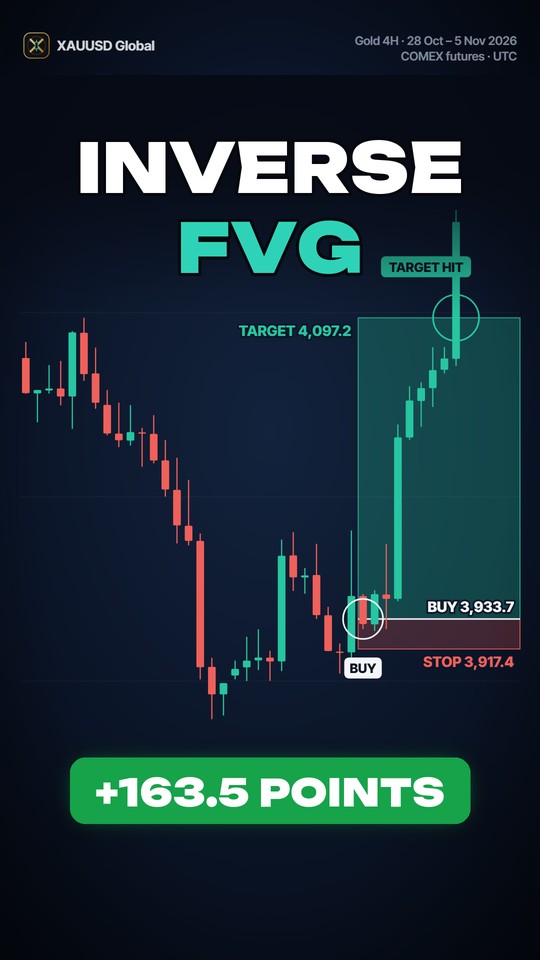
Inverse Fair Value Gap: When the Gap Fails and Flips
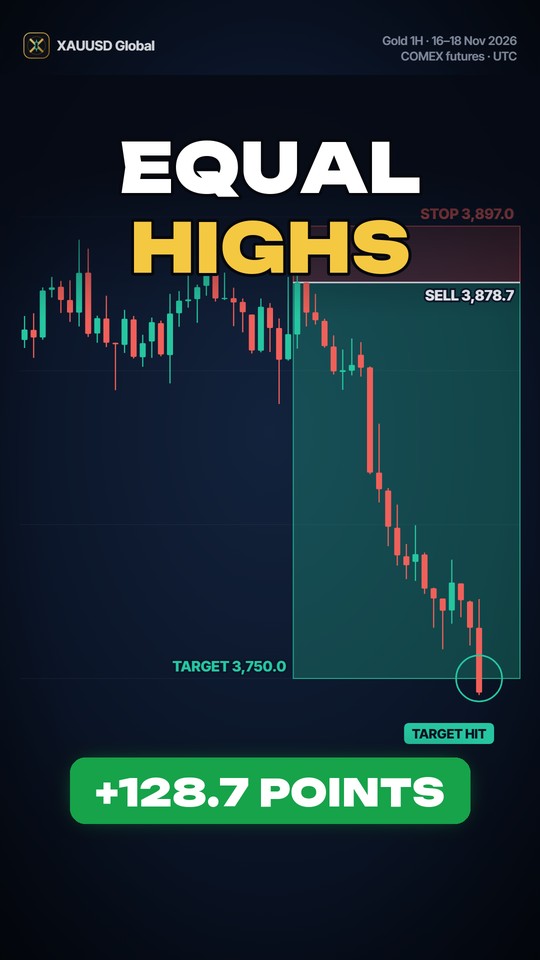
Equal Highs on Gold: Where the Stops Get Grabbed
Trendlines and Channels on Gold (XAUUSD): Step by Step